
Your room is quiet, yet your mind keeps spinning. You replay the day. You worry about tomorrow’s list. Sleep feels light, so you wake up tired. You can change that with a short evening routine that takes ten minutes. Below you will find a simple flow, five proven prompts, two short examples, and practical tips to help you start tonight. The goal is clear. Close the day, clear your head, and sleep more deeply.
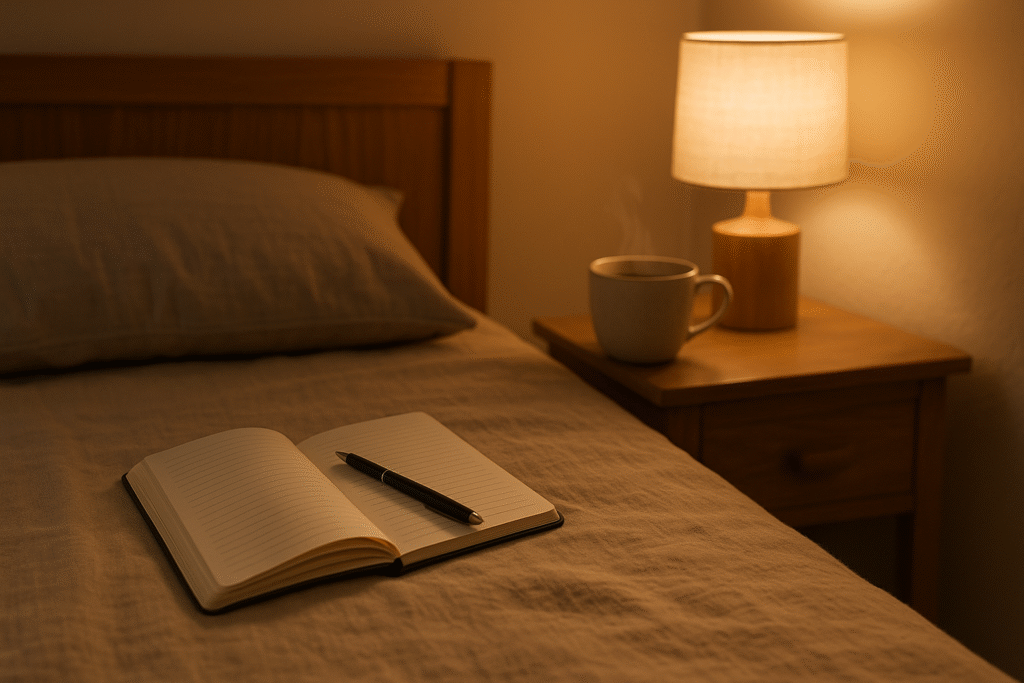
What evening self-reflection is and why it helps introverts
Evening self-reflection is a short, structured check in at the end of your day. You notice how you feel, name what mattered, then choose one small action for tomorrow. It is not a long diary. It is a focused habit you can keep.
Why it helps you.
- You empty your head, so it is easier to switch off.
- You see what drained you and what filled you, so you set smarter boundaries tomorrow.
- You end on a win, so your mood is steadier.
- You signal that the day is done, so sleep is deeper.
Common mistakes are easy to fix. Do not write a page. Do not chase perfect sentences. Do not sit down without a plan. Pick a fixed time and a fixed spot instead. Same chair, same light, same pen. Your body will learn the cue and relax faster.
Set up your space in two minutes
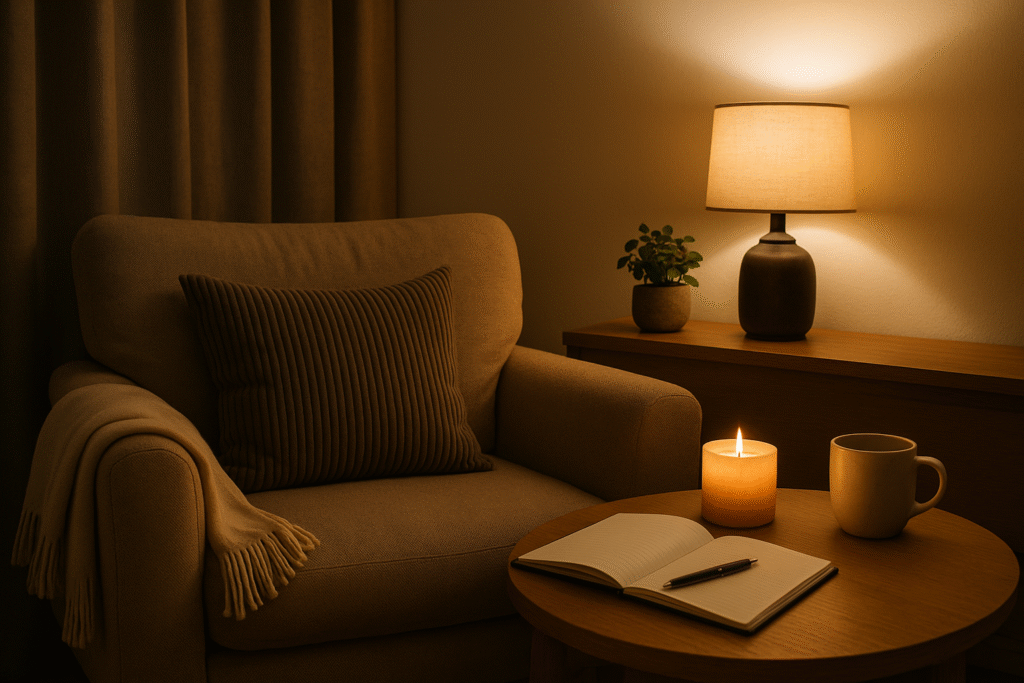
Keep it simple. Grab a pen and a notebook. Set a ten-minute timer. Sit in a quiet corner with soft light. Put your phone on airplane mode or leave it in another room because notifications break focus. If you sit in the same place at the same time, the routine sticks more easily.
The 10-minute flow, step by step
Follow the minutes for your first week. After that, you can do it by feel.
Minute 0 to 2. Breathe and write one line about how you feel right now. Use plain words. Calm, wired, tense, grateful, heavy, light. Name it without judging it.
Minute 2 to 7. Answer two prompts from the list below. Keep each answer to three to five lines. Short entries make it easy to come back tomorrow.
Minute 7 to 9. Write one sentence about a lesson from today. Write one sentence about a small win. Tiny counts. You asked for clarity. You took a ten-minute walk. You paused before saying yes.
Minute 9 to 10. Choose one small action for tomorrow that protects your energy. Block a 15-minute focus slot. Fill a water bottle and place it on your desk. Prepare one boundary sentence for a meeting. End with one closing line. I am done for today.
Five proven prompts for introverts
Rotate these through the week. They are specific, so you can act on what you write.
- What drained me today and why.
- What gave me energy and why.
- Which boundary I kept or want to keep tomorrow.
- One thing I wish I had said and how I will say it next time.
- What I am grateful for tonight.
If you want more variety, use the 103-page book, 100 Self Reflective Questions. It gives you one focused question per page, with space to write your answer on the same page. You can highlight your favorites and return to them when you need a nudge.
Two short examples that show the right length and tone
Many people skip night journaling because they think it takes a full page. It does not. These examples show how three to five lines per step are enough.
Workday example
Right now I feel foggy and tense behind my eyes.
Draining. Back-to-back calls with no agenda, so I felt rushed and vague.
Energy. A quiet 20-minute lunch without my phone, and I felt calmer after.
Lesson. A 10-minute buffer helps me think clearly.
Win. I asked for an agenda for tomorrow’s call.
Tiny action. Decline one optional meeting.
Closing. I am done for today.
Weekend example
Right now I feel slow and light.
Draining. Grocery store at peak time, so I got impatient.
Energy. Reading for half an hour with tea, and it settled me.
Lesson. Early errands suit me better.
Win. I planned dinners for the week, so there will be fewer decisions.
Tiny action. Shop at 9 a.m. next Saturday, because it is quieter.
Closing. I am done for today.
Notice the tone. Clear, honest, connected with simple transitions. No drama. No fluff. You are collecting data about yourself so you can make easier choices.
Track progress without pressure
Pick one metric to mark each night. Sleep quality or social battery both work. Use a simple 1 to 5 scale. Every Friday, scan your notes and look for patterns. Which tasks drained you. Which activities helped. Which time of day fits deep work. A five-minute review turns notes into better plans for next week.
If you want a fresh question every night, keep 100 Self Reflective Questions on your desk. The book has 103 pages. It gives you 100 single question pages with space to write. You can turn to the next page, answer one focused question, and stop. The format keeps the routine light and consistent.
Common roadblocks and quick fixes
Too tired to write. Record a 30 second voice note, then write one line. The point is to capture the signal, not to craft perfect sentences.
Blank mind. Keep a small prompt card. Start with What drained me today and why. Two sentences later you will have momentum.
Missed days. Do not catch up. Write one sentence and restart. Consistency grows from small restarts.
Afraid of big feelings. Keep the session to ten minutes and end with a grounding line. I am safe. I did enough for today.
These small adjustments keep the habit light, so you will keep it even on busy weeks.
Start tonight
- Pick a fixed time, for example 9.45 p.m.
- Place your notebook and pen where you plan to sit.
- Set a repeating reminder and turn on airplane mode for ten minutes.
- Follow the 10-minute flow for seven nights in a row.
- On Friday, review your notes and choose one boundary or one energy habit to keep next week.
FAQ
How is this different from general journaling?
General journaling can be long and open ended. This method is short and structured, so you get the benefit without the time burden.
Can I do it in the morning?
Yes, although the evening version closes loops before sleep. If mornings fit you better, name yesterday’s lesson and pick one action for today.
What if I live with others and have little quiet?
Use headphones and a timer. Sit at the kitchen table or in a hallway. Keep the ten-minute window because the routine matters more than perfect silence.
Do I need special tools?
No. A pen and paper are enough. If you want ready prompts, use 100 Self Reflective Questions. The book has 103 pages, with one question per page and room to write, so your answers stay in one place.
How long until I notice changes?
Many people feel lighter after the first night. Clear patterns show up in one to two weeks, and sleep often improves as your mind learns to switch off.
Next step
A calm evening does not require an hour. Ten minutes of evening self-reflection can quiet your mind, protect your energy, and set a clear direction for tomorrow. Breathe, answer two prompts, note one lesson and one win, choose one small action, then close the day.
If you want consistent variety without thinking about what to ask, use 100 Self Reflective Questions. Open to one page tonight, set a timer, and try the flow once. Then share which question helped you most.